
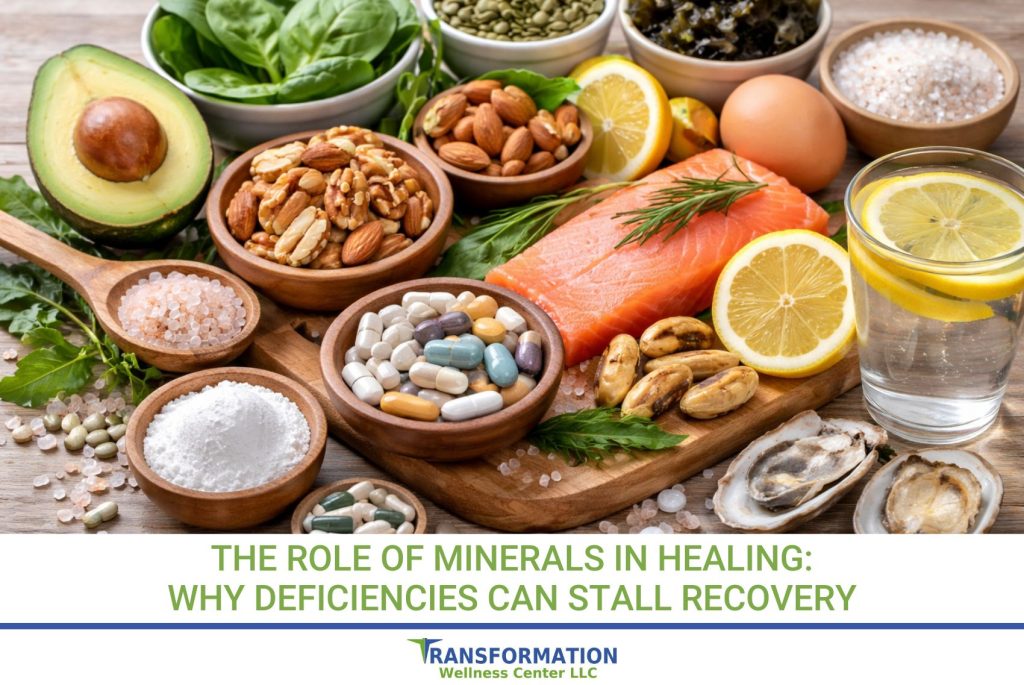
Healing is not just about treating symptoms—it’s about restoring balance at the cellular level. While vitamins, hormones, and lifestyle changes often receive most of the attention, minerals play an equally critical yet frequently overlooked role in recovery and long-term wellness.
At Transformation Wellness Center, we regularly see patients whose healing has plateaued despite doing “everything right.” Often, the missing piece is mineral balance. Deficiencies in key minerals such as magnesium, zinc, iodine, selenium, and electrolytes can silently disrupt healing, energy production, immune function, and hormonal regulation.
Understanding how these minerals work—and why deficiencies can stall progress—is essential for anyone seeking optimal health.
Why Minerals Matter for Healing
Minerals act as cofactors in hundreds of biochemical reactions throughout the body. Without sufficient mineral levels, enzymes cannot function properly, nerves misfire, muscles weaken, hormones fall out of balance, and detox pathways slow down.
Unlike vitamins, which are often replenished quickly, mineral deficiencies can persist for years, especially when stress, medications, poor digestion, or chronic illness are involved.
When the body lacks the minerals it needs, it shifts into survival mode—prioritizing basic function over repair and regeneration.
Magnesium: The Master Mineral for Recovery
Magnesium is involved in over 300 enzymatic processes, making it one of the most critical minerals for healing.
Key benefits of magnesium include:
- Muscle relaxation and reduced spasms
- Nervous system calming and stress resilience
- Improved sleep quality
- Blood sugar regulation
- Support for mitochondrial energy production
Low magnesium levels are commonly associated with fatigue, anxiety, insomnia, muscle pain, headaches, and slow tissue repair. Chronic stress rapidly depletes magnesium, which is why many patients feel stuck in a cycle of exhaustion and inflammation.
Zinc: Immune Defense and Tissue Repair
Zinc plays a central role in immune function, wound healing, and cellular growth.
Zinc is essential for:
- Proper immune response
- Skin and gut tissue repair
- Hormone production (including insulin and sex hormones)
- Taste, smell, and appetite regulation
Deficiency can lead to frequent infections, slow wound healing, hair thinning, poor digestion, and impaired immune resilience—all of which can significantly delay recovery.
Iodine: Thyroid Health and Cellular Energy
Iodine is best known for its role in thyroid hormone production, but its influence extends far beyond metabolism.
Iodine supports:
- Thyroid hormone synthesis
- Brain development and cognitive function
- Breast, ovarian, and prostate tissue health
- Antimicrobial defense
Insufficient iodine can contribute to fatigue, weight resistance, cold intolerance, brain fog, and hormonal imbalance. Even mild deficiencies can disrupt energy production and slow healing at the cellular level.
Selenium: Antioxidant Protection and Immune Balance
Selenium works closely with iodine and is critical for thyroid conversion and antioxidant defense.
Selenium helps with:
- Protecting cells from oxidative damage
- Supporting immune modulation
- Converting inactive thyroid hormone (T4) into its active form (T3)
- Reducing inflammation
Low selenium levels may lead to thyroid dysfunction, increased inflammation, weakened immunity, and slower recovery from illness or injury.
Electrolyte Balance: Cellular Communication and Hydration
Electrolytes—such as sodium, potassium, chloride, calcium, and magnesium—are essential for fluid balance, nerve signaling, and muscle function.
Proper electrolyte balance is necessary for:
- Cellular hydration
- Blood pressure regulation
- Heart rhythm stability
- Nerve impulse transmission
Imbalances can occur due to stress, sweating, low-carbohydrate diets, illness, medications, or inadequate intake. Symptoms often include fatigue, dizziness, headaches, muscle cramps, heart palpitations, and poor exercise tolerance—all of which can slow healing.
Why Mineral Deficiencies Are So Common
Modern lifestyles create the perfect storm for mineral depletion:
- Nutrient-depleted soils
- Highly processed foods
- Chronic stress
- Digestive dysfunction
- Certain medications (diuretics, antacids, birth control, PPIs)
Without proper assessment, deficiencies often go undetected, leaving patients frustrated when their recovery stalls.
A Functional Approach to Mineral Optimization
At Transformation Wellness Center, we take a personalized, root-cause approach. Rather than guessing, we assess mineral status through advanced testing, clinical evaluation, and symptom analysis. This allows us to create targeted strategies that support true healing—not just temporary relief.
Frequently Asked Questions (Q&A)
Q: Can I get enough minerals from food alone?
A: While a whole-food diet is foundational, soil depletion, stress, and absorption issues often make supplementation necessary—especially during healing or recovery.
Q: How do I know if I’m mineral deficient?
A: Symptoms such as fatigue, muscle cramps, anxiety, poor sleep, hair thinning, and slow recovery can indicate deficiencies. Testing provides the most accurate insight.
Q: Is taking a multivitamin enough?
A: Most multivitamins contain inadequate or poorly absorbed mineral forms. Targeted supplementation based on individual needs is far more effective.
Q: Can too much of a mineral be harmful?
A: Yes. Balance matters. This is why personalized guidance and testing are essential to avoid imbalances or toxicity.
Q: How long does it take to correct mineral deficiencies?
A: Many people notice improvements within weeks, but full repletion and cellular healing may take several months depending on severity and overall health.
Q: Do minerals affect hormones?
A: Absolutely. Minerals play key roles in thyroid function, insulin sensitivity, adrenal health, and reproductive hormones.
Q: Why do electrolytes matter if I drink plenty of water?
A: Hydration without electrolytes can dilute minerals and worsen fatigue. Cells require electrolytes—not just water—to function properly.
Contact Information
Transformation Wellness Center
2501 Blichmann Avenue, Suite 110
Grand Junction, CO 81505
📞 Phone: (970) 812-5559
🌐 Website: mytransformationwellness.com
📅 Request an Appointment:
https://mytransformationwellness.com/contact/
Disclaimer: The information in this post is for educational purposes only and does not constitute chiropractic advice, medical advice, or a provider-patient relationship from Dr. Andrea Jordheim, DC, CFMP. It aims to inform, not diagnose or treat conditions. Always consult your licensed healthcare provider before health changes.