
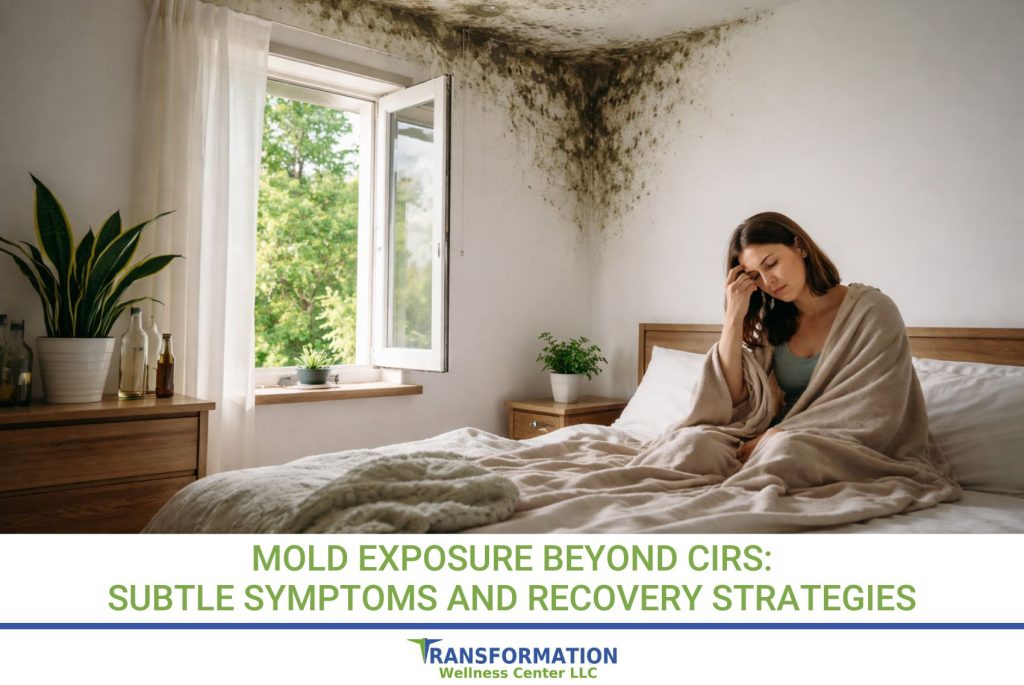
Mold exposure is often discussed in extremes—either dismissed entirely or framed only through severe diagnoses. However, for many individuals, the effects of mold exposure exist in a more subtle, chronic space that can still significantly impact quality of life. At Transformation Wellness Center, we frequently work with patients who feel “off” but don’t have clear answers, despite extensive testing or conventional evaluations.
Understanding how mold exposure affects the body—beyond well-known inflammatory syndromes—can be the key to unlocking healing, clarity, and long-term wellness.
Understanding Mold Exposure as an Environmental Stressor
Mold is a common environmental factor found in homes, workplaces, and public buildings. Water damage, poor ventilation, and humidity can allow mold spores and mycotoxins to accumulate in indoor environments. While not everyone reacts the same way, sensitive individuals may experience ongoing health challenges even after leaving the exposure source.
Rather than causing one single disease, mold often acts as a chronic stressor on multiple body systems, especially when exposure is prolonged.
Subtle and Often Overlooked Symptoms of Mold Exposure
Many people associate mold exposure with respiratory symptoms, but the effects can be far broader and more nuanced. Symptoms may come and go, change over time, or appear unrelated on the surface.
Common but frequently overlooked symptoms include:
- Persistent fatigue or low energy
- Brain fog, difficulty concentrating, or memory issues
- Headaches or pressure behind the eyes
- Mood changes such as anxiety, irritability, or low mood
- Sleep disturbances
- Digestive issues, bloating, or food sensitivities
- Joint or muscle discomfort without clear injury
- Increased sensitivity to chemicals, fragrances, or foods
- Recurrent sinus or throat irritation
Because these symptoms overlap with many other conditions, mold exposure is often missed or minimized.
Why Traditional Testing May Not Provide Clear Answers
Standard medical testing is excellent at identifying acute illness but may not always capture environmentally driven dysfunction. Many patients are told their labs are “normal,” yet they still don’t feel well.
This is because mold exposure often affects:
- Detoxification pathways
- Immune regulation
- Nervous system balance
- Hormonal signaling
- Gut health
When these systems are under chronic stress, symptoms can persist even without a single abnormal lab value.
Recovery Strategies That Support the Whole Body
Healing from mold exposure is not about one pill or protocol—it’s about restoring balance and reducing the body’s overall toxic and inflammatory burden.
At Transformation Wellness Center, recovery strategies are personalized and may include:
1. Environmental Awareness and Reduction
Healing is difficult if exposure continues. Identifying and addressing environmental triggers—whether at home or work—is a critical first step.
2. Supporting Detoxification
The body has built-in detox pathways, but they can become overwhelmed. Supporting liver function, lymphatic flow, and elimination pathways helps the body process and remove unwanted compounds more efficiently.
3. Nervous System Regulation
Chronic environmental stress can keep the nervous system in a constant “fight or flight” state. Gentle strategies that support relaxation and regulation can dramatically improve symptoms like brain fog, sleep issues, and fatigue.
4. Gut and Immune Support
The gut plays a central role in immune balance. Supporting digestion, nutrient absorption, and microbial balance helps improve resilience and symptom recovery.
5. Personalized Nutritional Support
Targeted nutrition and supplementation can help replenish depleted nutrients and support cellular repair, without overwhelming the body.
Why a Personalized Approach Matters
No two individuals respond to mold exposure in the same way. Genetics, past health history, stress levels, and duration of exposure all influence how symptoms present and how recovery unfolds.
A personalized, integrative approach allows care to adapt as the body heals—rather than forcing a one-size-fits-all solution.
Frequently Asked Questions About Mold Exposure
Can mold exposure affect people without allergies or asthma?
Yes. Mold exposure can impact neurological, immune, and metabolic systems even in individuals without classic allergic reactions.
Why do symptoms sometimes worsen after leaving a moldy environment?
When the body begins to detox and rebalance, symptoms may temporarily intensify before improving. This does not mean healing isn’t occurring—it often means the body is finally responding.
Is mold exposure only a concern in visibly damaged buildings?
No. Mold can be present behind walls, under flooring, or in HVAC systems even when no visible signs are present.
How long does recovery from mold exposure take?
Recovery timelines vary. Some people feel improvement within weeks, while others require longer-term support depending on exposure history and overall health.
Can lifestyle changes really make a difference?
Absolutely. Environmental adjustments, nutrition, stress management, and targeted support can significantly improve symptoms and long-term resilience.
Do I need to have a specific diagnosis to seek care?
No. Many individuals seek care simply because they don’t feel like themselves and want answers. You don’t need a label to begin the healing process.
Take the Next Step Toward Healing
If you suspect mold exposure or feel that environmental factors may be affecting your health, you don’t have to navigate it alone. At Transformation Wellness Center, we focus on uncovering root contributors and supporting your body’s natural ability to recover—at your pace, with clarity and compassion.
Contact Information
Transformation Wellness Center
2501 Blichmann Avenue, Suite 110
Grand Junction, CO 81505
Phone: (970) 812-5559
Website: https://mytransformationwellness.com
Request an Appointment:
https://mytransformationwellness.com/contact/
Disclaimer: The information in this post is for educational purposes only and does not constitute chiropractic advice, medical advice, or a provider-patient relationship from Dr. Andrea Jordheim, DC, CFMP. It aims to inform, not diagnose or treat conditions. Always consult your licensed healthcare provider before health changes.