
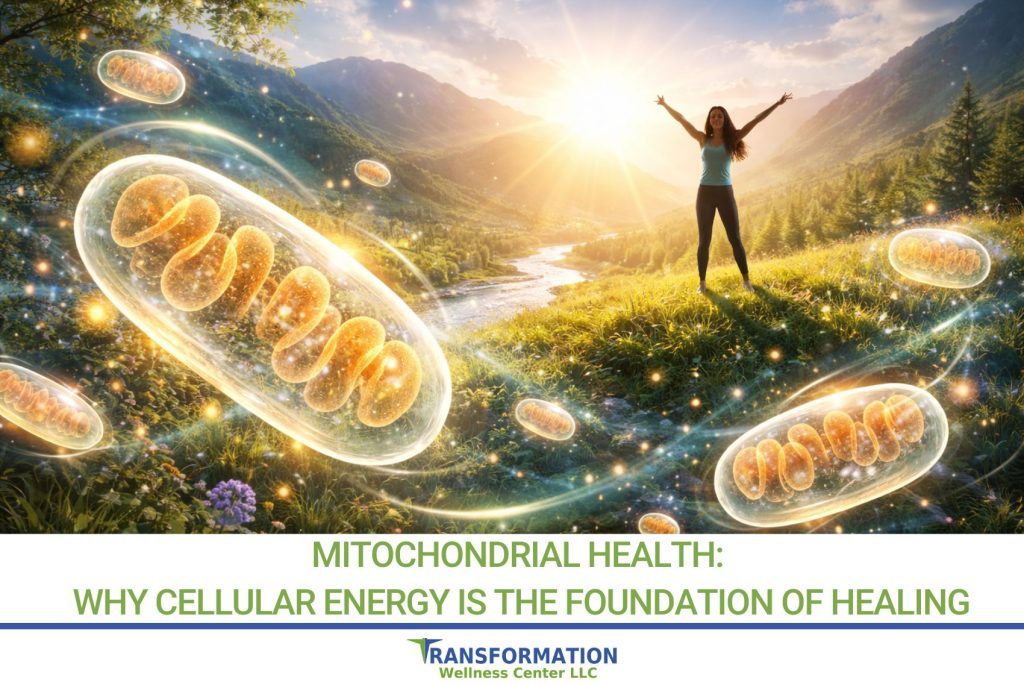
When people struggle with chronic fatigue, brain fog, hormonal imbalance, or long-standing illness, the root cause often goes deeper than surface-level symptoms. True healing begins at the cellular level, and at the center of cellular health lies one critical component: the mitochondria.
At Transformation Wellness Center, we focus on identifying and supporting the underlying causes of fatigue and chronic disease—starting with the systems that fuel your body’s ability to heal, adapt, and thrive.
What Are Mitochondria and Why Are They So Important?
Mitochondria are often called the “powerhouses of the cell.” Their primary role is to convert nutrients and oxygen into ATP (adenosine triphosphate), the energy currency your body uses for every function—movement, digestion, detoxification, hormone production, brain activity, and immune defense.
When mitochondrial function is compromised, the body simply does not have the energy it needs to maintain health or recover from illness.
Healthy mitochondria support:
- Sustained physical energy
- Mental clarity and focus
- Hormonal balance
- Immune system resilience
- Faster healing and recovery
- Reduced inflammation
The Link Between Mitochondrial Dysfunction and Chronic Fatigue
Persistent fatigue is not just “being tired.” For many individuals, it is a sign that cells are unable to produce adequate energy.
Mitochondrial dysfunction has been linked to:
- Chronic fatigue syndrome
- Fibromyalgia
- Autoimmune conditions
- Long COVID
- Thyroid disorders
- Hormonal imbalances
- Metabolic dysfunction
- Neurodegenerative conditions
When mitochondria are under stress, the body shifts into survival mode. Over time, this can lead to worsening symptoms, poor stress tolerance, and slowed healing.
How Chronic Illness Impacts Cellular Energy
Chronic illness places a heavy demand on mitochondria. Factors that commonly damage or weaken mitochondrial function include:
- Chronic inflammation
- Oxidative stress
- Nutrient deficiencies
- Toxin exposure
- Infections
- Blood sugar instability
- Poor sleep
- Prolonged emotional stress
Without targeted support, mitochondria can become damaged faster than the body can repair them—resulting in ongoing fatigue, pain, and decreased vitality.
Why Supporting Mitochondria Improves Overall Vitality
Healing is an energy-dependent process. Every repair mechanism in the body—from immune response to tissue regeneration—requires ATP. By restoring mitochondrial health, patients often experience improvements across multiple systems at once.
Supporting mitochondria can lead to:
- Increased daily energy without stimulants
- Improved exercise tolerance
- Better sleep quality
- Enhanced mood and mental clarity
- Reduced pain and inflammation
- Improved metabolic and hormonal balance
At Transformation Wellness Center, care is designed to support mitochondrial health as part of a whole-body, functional approach to wellness.
A Root-Cause Approach to Healing
Rather than masking symptoms, a mitochondrial-focused strategy looks at:
- Nutritional support for cellular energy production
- Reducing inflammation and oxidative stress
- Supporting detoxification pathways
- Optimizing hormone and metabolic health
- Improving oxygen utilization and circulation
This integrative approach helps the body regain its natural ability to heal and maintain long-term vitality.
Frequently Asked Questions About Mitochondrial Health
What are signs of poor mitochondrial health?
Common signs include chronic fatigue, brain fog, muscle weakness, exercise intolerance, frequent illness, slow recovery, and difficulty managing stress.
Can mitochondrial dysfunction be reversed?
In many cases, mitochondrial function can be significantly improved with proper support, lifestyle changes, targeted nutrition, and addressing underlying stressors.
Why do I feel exhausted even after sleeping?
Sleep alone does not restore energy if mitochondria cannot efficiently produce ATP. Poor cellular energy production often leads to unrefreshing sleep.
Is mitochondrial dysfunction common in chronic illness?
Yes. Many chronic conditions share mitochondrial dysfunction as a common underlying factor, which is why symptoms often overlap across different diagnoses.
How does inflammation affect mitochondria?
Chronic inflammation damages mitochondrial membranes and increases oxidative stress, reducing the cell’s ability to produce energy efficiently.
Can stress impact mitochondrial health?
Absolutely. Chronic emotional and physical stress increases cortisol and oxidative damage, which directly impairs mitochondrial function.
How long does it take to notice improvements?
This varies by individual, but many patients notice improvements in energy, focus, and stamina within weeks when mitochondrial health is properly supported.
Is mitochondrial health important even if I don’t have a diagnosis?
Yes. Supporting mitochondrial function is foundational for prevention, healthy aging, and optimal performance—not just disease management.
Start Supporting Your Cellular Energy Today
If you are experiencing persistent fatigue, chronic illness, or a decline in vitality, it may be time to look deeper—at the cellular level. Supporting mitochondrial health can be a powerful step toward restoring energy, resilience, and overall wellness.
Transformation Wellness Center
📍 2501 Blichmann Avenue, Suite 110
Grand Junction, CO 81505
📞 Phone: (970) 812-5559
🌐 Website: mytransformationwellness.com
🗓️ Request An Appointment:
https://mytransformationwellness.com/contact/