
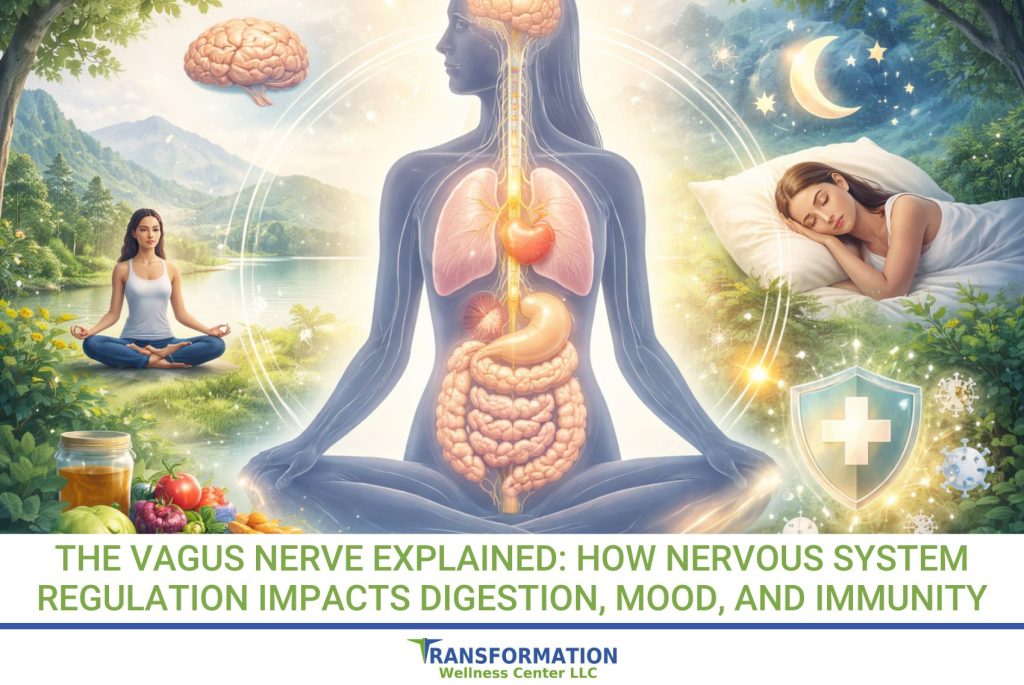
When we think about health, we often focus on individual systems—digestive health, mental well-being, or immune strength. But what if one central pathway helped regulate all three? Enter the vagus nerve, one of the most powerful and influential nerves in the human body.
At Transformation Wellness Center, we take a whole-body approach to healing. Understanding how the vagus nerve works—and how it’s affected by stress and trauma—can be a key step toward restoring balance, resilience, and overall wellness.
What Is the Vagus Nerve?
The vagus nerve is the longest cranial nerve in the body, running from the brainstem down through the neck and chest into the abdomen. It acts as a primary communication highway between the brain and many vital organs, including the heart, lungs, digestive tract, and immune system.
It is a core component of the parasympathetic nervous system, often referred to as the “rest and digest” system. When the vagus nerve is functioning well, the body is better able to relax, repair, and regulate itself.
Nervous System Balance: Why It Matters
Your nervous system is constantly shifting between two primary states:
- Sympathetic (fight or flight) – activated during stress, danger, or high demand
- Parasympathetic (rest and digest) – promotes calm, healing, and recovery
Chronic stress, unresolved trauma, or prolonged emotional strain can keep the body stuck in a sympathetic state. Over time, this imbalance can reduce vagal tone—the efficiency and responsiveness of the vagus nerve—making it harder for the body to regulate digestion, mood, and immune function.
How the Vagus Nerve Impacts Digestion
The vagus nerve plays a critical role in digestive regulation by:
- Stimulating digestive enzyme and stomach acid production
- Supporting coordinated gut motility
- Enhancing communication between the brain and digestive organs
When the nervous system is dysregulated, digestion often slows or becomes inefficient—not because of a digestive disease, but because the body doesn’t feel “safe” enough to focus on digestion. This is why stress and emotional overload can lead to bloating, discomfort, or appetite changes without a clear dietary cause.
The Vagus Nerve and Mood Regulation
The vagus nerve is deeply connected to emotional health. In fact, it influences:
- Neurotransmitter activity (including serotonin and GABA)
- Heart rate variability (a marker of emotional resilience)
- The body’s ability to return to calm after stress
Low vagal tone has been associated with anxiety, low mood, emotional reactivity, and difficulty recovering from stressful experiences. Supporting vagus nerve function can improve emotional regulation and promote a greater sense of calm and stability.
Immune Function and the Inflammatory Response
The vagus nerve also helps regulate immune balance through what’s known as the inflammatory reflex. This mechanism allows the nervous system to signal the immune system to calm excessive inflammation.
When vagal signaling is impaired, inflammation may become more persistent, contributing to fatigue, frequent illness, or prolonged recovery. Supporting nervous system regulation can therefore play a meaningful role in immune resilience—without directly targeting the immune system itself.
Stress, Trauma, and the Vagus Nerve Connection
Trauma—whether physical, emotional, or chronic—can disrupt the nervous system’s ability to self-regulate. Even long after a stressful event has passed, the body may remain in a protective state.
This ongoing activation can dampen vagal tone and create symptoms that feel unrelated on the surface, such as:
- Digestive discomfort
- Sleep disturbances
- Mood changes
- Low energy or burnout
A trauma-informed, whole-body approach recognizes that healing doesn’t happen in isolated systems—it happens through restoring safety and balance in the nervous system.
Supporting Vagus Nerve Health Naturally
While every individual’s needs are different, gentle strategies that support vagal tone often include:
- Breathwork and slow, controlled breathing
- Mindfulness and body-based relaxation practices
- Gentle movement and postural awareness
- Creating consistent routines that signal safety to the body
At Transformation Wellness Center, care is personalized to help address underlying nervous system stressors rather than just managing surface-level symptoms.
Frequently Asked Questions (Q&A)
What does it mean to have low vagal tone?
Low vagal tone refers to reduced efficiency of the vagus nerve’s ability to regulate bodily functions. It’s often associated with chronic stress, emotional dysregulation, and slower recovery from illness or stress.
Can vagus nerve dysfunction cause digestive issues?
Yes. Because the vagus nerve helps regulate digestive processes, nervous system imbalance can interfere with digestion even when no structural digestive condition is present.
Is vagus nerve regulation only helpful for mental health?
No. While it plays a major role in emotional regulation, the vagus nerve also affects digestion, heart rate, inflammation, and immune balance—making it essential for whole-body health.
How long does it take to improve vagal tone?
Improvement varies depending on stress levels, lifestyle factors, and overall health. Consistent nervous system-supportive practices can lead to noticeable changes over time.
Can chronic stress really affect immunity?
Yes. Chronic stress keeps the nervous system in a heightened state, which can disrupt immune signaling and contribute to prolonged inflammation or slower recovery.
Whole-Body Healing Starts With Regulation
Understanding the vagus nerve offers a powerful lens through which to view health—not as isolated symptoms, but as interconnected systems influenced by stress, trauma, and regulation. Supporting nervous system balance can create a ripple effect across digestion, mood, and immune resilience.
If you’re ready to explore a more integrated approach to wellness, Transformation Wellness Center is here to support you.
Contact Information
Transformation Wellness Center
📍 2501 Blichmann Avenue, Suite 110
Grand Junction, CO 81505
📞 Phone: (970) 812-5559
🌐 Website: https://mytransformationwellness.com
📅 Request an Appointment:
https://mytransformationwellness.com/contact/
Disclaimer: The information in this post is for educational purposes only and does not constitute chiropractic advice, medical advice, or a provider-patient relationship from Dr. Andrea Jordheim, DC, CFMP. It aims to inform, not diagnose or treat conditions. Always consult your licensed healthcare provider before health changes.